Neural Behavioral Assessment
Background
Few studies examine occupational exposure among adolescents. Most existing studies focus on a single time point, rather than repeated or longitudinal exposure.
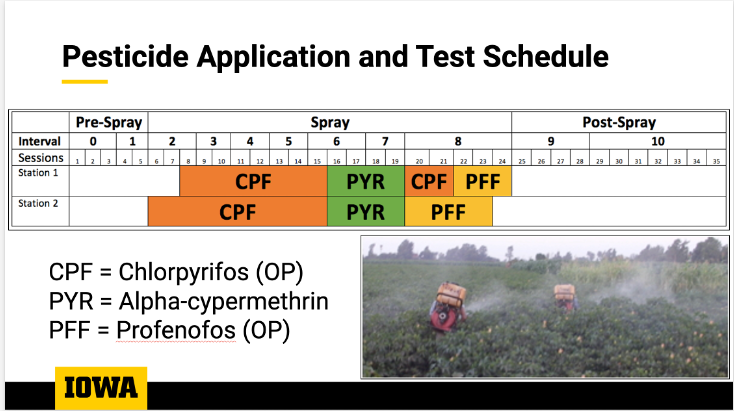
Study Methods
Participants: Adolescent and Adult Pesticide Workers
- Informed Consent/Assent
- Occupational Surveys
- Workplace Observations
- Air Samples
- Dermal Patch Samples
- Blood and Urine Collection
- Medical Exams
- Neurobehavioral Tests
- ADHD Assessments
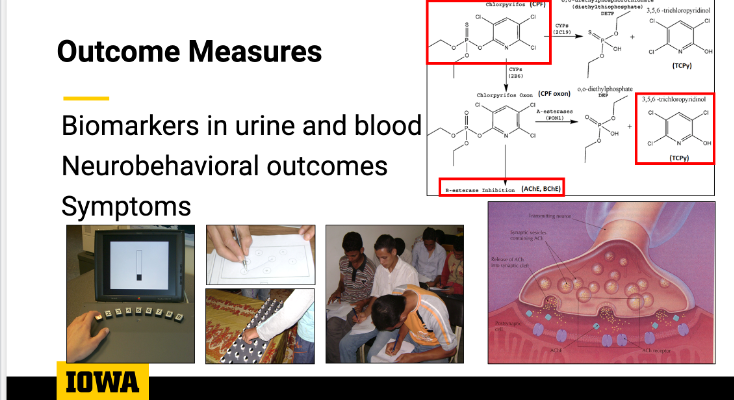
Outcome Measures
- Biomarkers in urine and blood
- Neurobehavioral outcomes
Symptoms tracked before, during, and after the application season
Neurobehavioral (Cognitive) Tests
Memory and Learning
- Serial Digit Learning
- Benton Visual Retention
- Reversal Learning
Attention / Short-Term Memory
- Digit Span
Sustained Attention
- Selective Attention
Motor Speed / Coordination
- Finger Tapping
- Santa Ana Pegboard
Information Processing Speed
- Reaction Time
Executive Functioning
- Symbol-Digit
- Trail Making
Verbal Abstraction
- Similarities
Perception
- Block Design
What Do We Know?
- Applicators (high exposed) showed impaired performance compared to controls on most neurobehavioral tests.
- These effects remained one year later.
- Biomarkers of exposure and effect (e.g., cholinesterase activity) showed recovery after exposure ended, but cognitive deficits persisted.
- Non-applicators still experienced environmental exposures to Chlorpyrifos comparable to applicators.
- Linesterase depression followed exposure but was not directly associated with neurobehavioral impairment.
What Do We Do Next?
To protect adolescent and adult pesticide workers, we must act on findings using the Hierarchy of Controls:
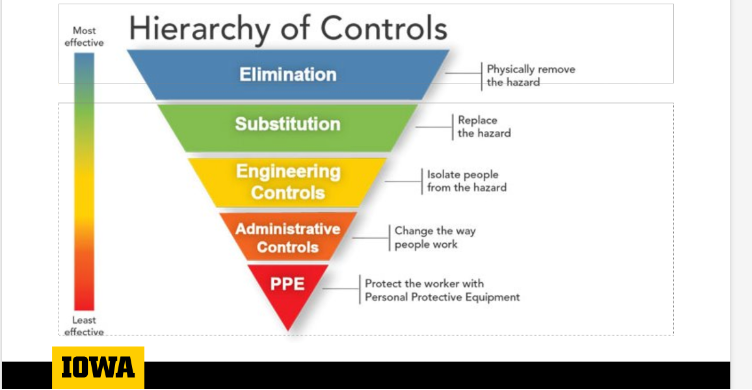
1. Elimination and Substitution
- Encourage less toxic pesticide alternatives (e.g., biocides) through MOA programs.
- If pesticides are only distributed by the MOA, they can provide proper training and oversight.
- Shops currently sell pesticides without proper safety knowledge, often prioritizing profit.
2. Engineering and Administrative Controls
- Ventilation improvements and safe spraying systems.
- Training schedules aligned with seasons of high risk.
- Limit youth labor during high-exposure periods.
3. Personal Protective Equipment (PPE)
- Increase access to gloves, goggles, and protective clothing.
- Ensure training on correct use, cleaning, and limitations.
Focus Groups and Intervention Development
A participatory approach was used to identify feasible, culturally relevant solutions to reduce pesticide exposure. Focus group discussions addressed:
- PPE: Availability, usability, and perceived barriers
- Workplace Policies: Practices for storage, re-entry intervals, and training
- Engineering Controls: Spraying tools, shields, and ventilation
- Outside of Work: Recommendations to wash work clothes separately, keep windows closed, and avoid re-entry to treated fields
- Intervention Format: Culturally relevant materials, delivered by trusted health workers, teachers, or agricultural staff
Key findings:
- The participatory intervention led to measurable changes in attitudes and behaviors.
- This is the first longitudinal study to examine pesticide exposure and neurobehavioral outcomes in an occupationally exposed adolescent population.